

Discovery of Safer Novel Pain Therapeutics with Generative AI
Mindbeam uses generative AI to design novel TRPV1 modulators that mimic AM404 while aiming to avoid acetaminophen-related liver toxicity.

Acetaminophen remains the bedrock of global pain management, with Americans alone consuming roughly 25 billion doses annually. Despite being introduced over a century ago, it remains the primary viable option for vulnerable populations – including children, pregnant women, and the elderly – because it avoids the gastrointestinal risks of NSAIDs and the addictive properties of opioids. Yet, this reliance comes at a massive cost: acetaminophen overdose is the leading cause of acute liver failure in the United States. This rigid hepatotoxicity ceiling leaves millions of patients with a dangerous therapeutic gap and absolutely nowhere else to turn for safe pain relief.
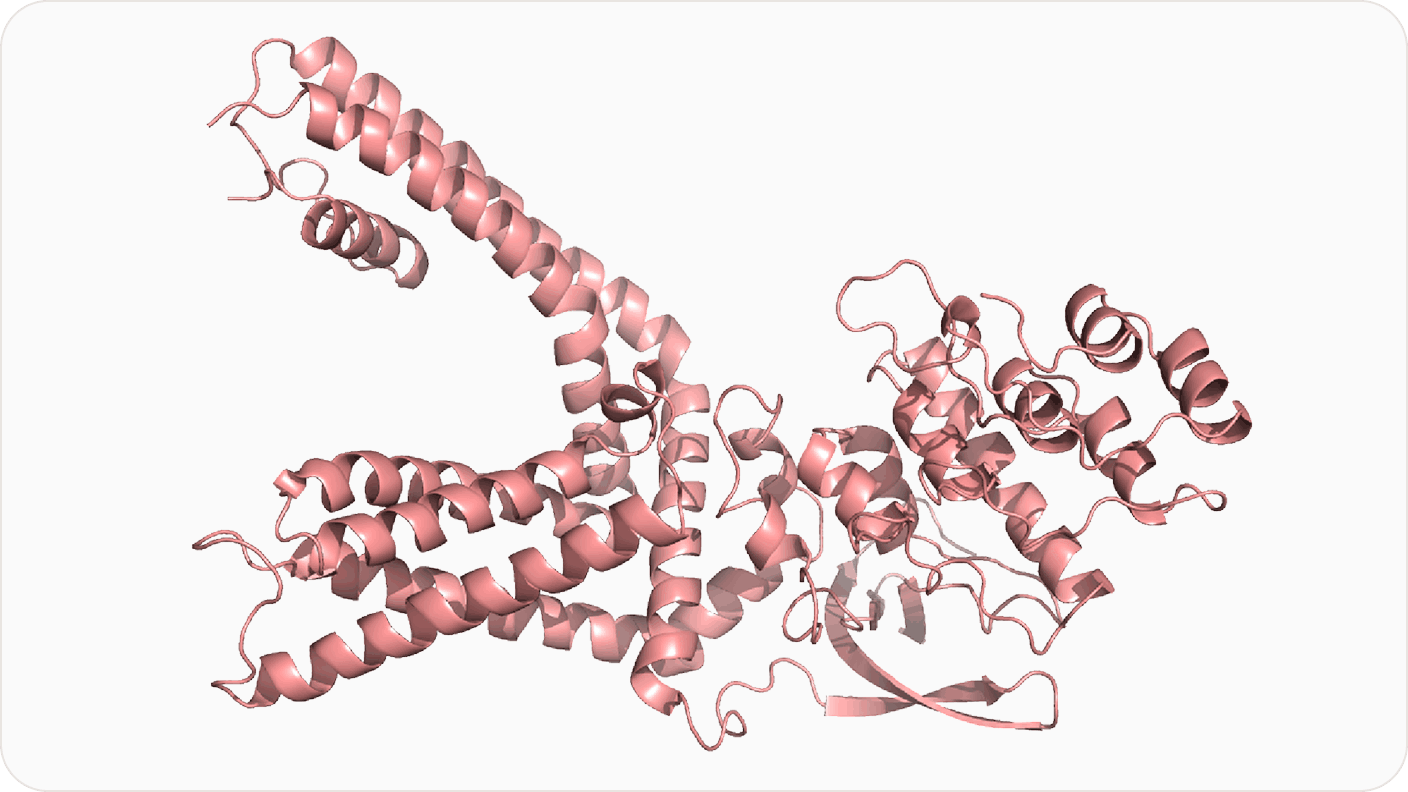
At Mindbeam Research, we are leveraging artificial intelligence to bridge this gap by targeting TRPV1, an ion channel central to pain processing that has historically eluded conventional drug development. Because traditional drug discovery methods rely on slow, brute-force experimental screening, safely modulating this historically intractable target has proven stubbornly difficult. By deploying advanced machine learning frameworks, we are compressing standard drug development timelines, while bringing a new level of molecular precision to a field that has been stagnant for a century.
From Screening to Designing: The Next Step
The early computational work in this space built a critical foundation, but it was still largely reactive - teaching computers to look for promising compounds within libraries of what already existed. Today, the field has moved into far more ambitious territory.
Deep learning models capable of predicting how a drug candidate will interact with its target protein began to change the calculus. When applied to natural product libraries, these frameworks identified TRPV1-active compounds that traditional screening would likely have missed or deprioritized. Around the same time, structure-based virtual screening got sharper, with machine learning rescoring tools helping researchers cut through the noise in docking results and home in on the candidates most likely to actually work.
Then came something more fundamental. Tools like RFDiffusion and ProteinMPNN shifted the conversation from finding molecules to designing them. Rather than searching through known chemical space for something useful, researchers began generating entirely novel TRPV1 binders from the ground up, some of which are now moving into experimental validation. For a target that has resisted drug development for so long, that is a meaningful turn.
What We Are Doing at Mindbeam
At Mindbeam, we are building directly on this trajectory. Our drug discovery workflow integrates generative AI to design next-generation small-molecule TRPV1 modulators. To our knowledge, we are among the first to apply generative AI specifically to this target class.
The practical difference this makes is real: by running large-scale computational molecular design alongside conventional screening, we can explore a far wider range of candidates than experimental synthesis alone would allow, while compressing the timeline and reducing the costs that typically slow early-stage drug development down.
Why It Matters
The stakes here are not abstract. The patients most in need of better pain therapeutics are also the ones least able to tolerate the risks that come with existing options. Getting the efficacy wrong means continued suffering. Getting the toxicity wrong, in a population already managing fragile health, can mean serious harm. That tension is precisely why we believe AI has a role to play not just in making drug discovery faster, but in making it more responsible.
If this platform delivers what we believe it can, the implications go beyond TRPV1. A generative AI workflow that is validated against one of the most intractable pain targets in the field becomes a template for approaching others. Our goal is not a single drug. It is a new discovery paradigm, one built around the patients for whom the current standard of care has never been good enough.
Mimicking AM404: The Science Behind Our Approach
Acetaminophen's analgesic action is more nuanced than most people realize. When ingested, the drug is first deacetylated in the liver to produce p-aminophenol, a metabolite that crosses the blood-brain barrier and is subsequently converted in the central nervous system to N-arachidonoylphenolamine, also known as AM404. This conversion is now believed to be central to acetaminophen's pain-relieving effect.
AM404 engages several molecular targets involved in pain signaling, most notably the TRPV1 receptor, and these interactions are thought to account for a significant portion of the drug's analgesic activity.
The problem, however, lies in a competing metabolic pathway. While part of the drug is converted into pain-relieving AM404, the liver also processes acetaminophen into N-acetyl-p-benzoquinone imine, or NAPQI, a reactive intermediate responsible for the hepatotoxicity that makes acetaminophen dangerous in overdose and limits its use in patients with compromised liver function.
Our objective is to sidestep this entirely. Rather than working through acetaminophen's metabolic route, we are designing novel compounds that mimic AM404 directly, with enhanced affinity and specificity for TRPV1 and without the hepatotoxic liability that comes with acetaminophen's conversion pathway.
Currently, no FDA-approved oral medication directly targets the TRPV1 receptor for pain management. Several TRPV1 modulators have reached clinical investigation over the years, but none have progressed to regulatory approval. The target has remained, in practical terms, out of reach.
What Our Platform Produced
Through our in-house generative AI and virtual screening platform, we produced 11 novel, chemically valid molecules and evaluated each for drug-like properties, binding affinity, and pharmacokinetic behavior using established in silico tools, benchmarking them against both acetaminophen and its AM404 metabolite.
As a group, the generated molecules occupied a broader region of chemical space than existing TRPV1 modulators published in the literature, which reflects well on the generative architecture underlying our platform. Binding affinities were consistently strong across repeated docking simulations, with several compounds outperforming AM404 itself.
Table 1: Binding energies of newly generated TRPV1 analogues alongside their corresponding seed molecules.
Among the 11 candidates, Compounds MB004, MB005, and MB010 emerged as the most promising following density functional theory calculations and comprehensive ADMET profiling. MB005 stood out as the lead candidate, distinguished by a balanced combination of good bioavailability, low toxicity risk, and strong binding affinity.
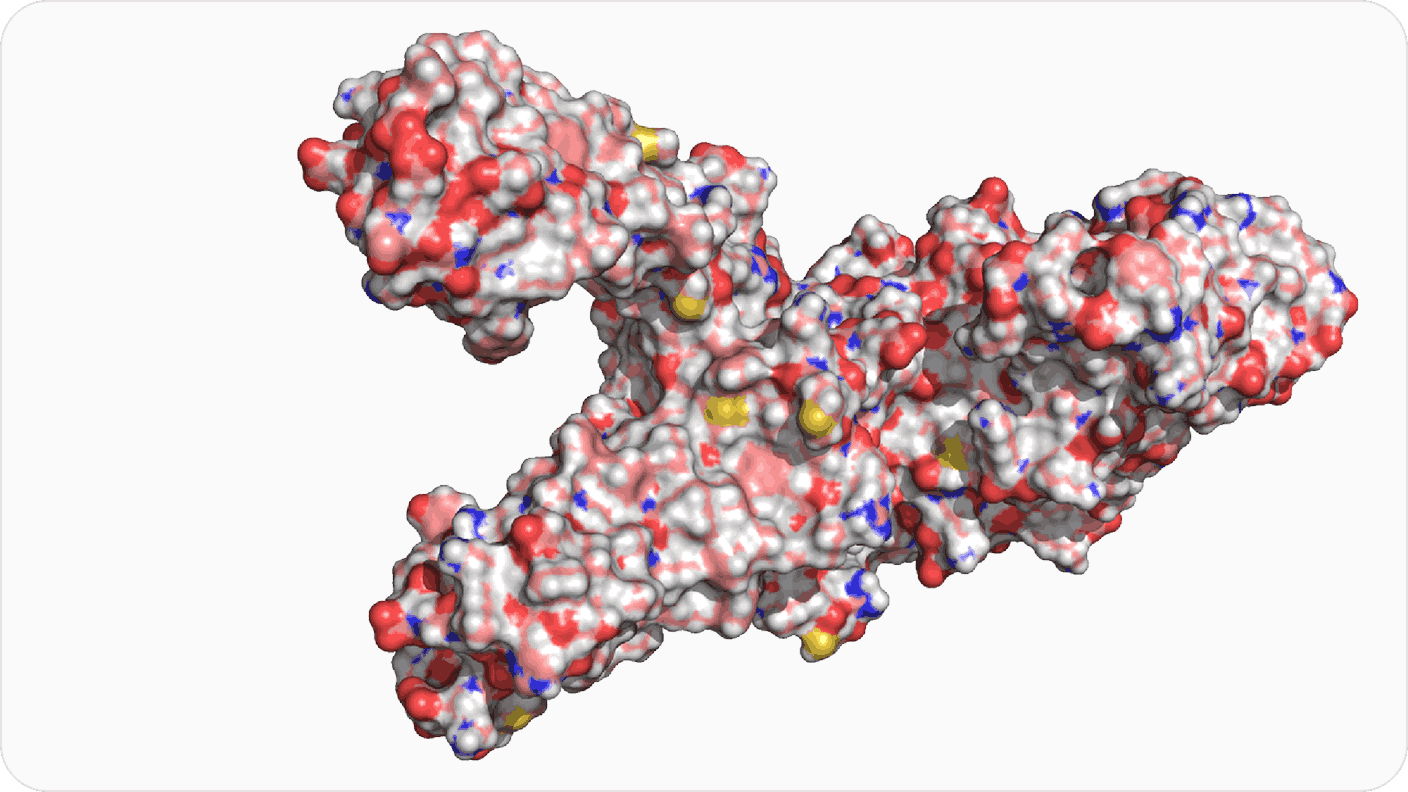
Its interaction analysis with TRPV1 revealed a key hydrogen bond between the hydroxyl hydrogen of tyrosine 511 and the carbonyl oxygen of the ligand, an interaction that anchors the compound within the active site and mirrors the binding behavior of the reference ligand used in our study. MB005 went further, forming two additional hydrogen bond interactions that contributed to its stabilization within the binding pocket. MB010, by contrast, lacked this polar contact, which corresponded to a measurable reduction in overall binding affinity.
Table 2: Predicted bioavailability, pharmacokinetic parameters, and toxicity profiles of the novel TRPV1 analogues and the standard drug, acetaminophen. GASA: Global Accessibility of Synthetic Routes. Promiscuous: whether a compound non-selectively binds to multiple unrelated biological targets. PAINS: Pan-Assay Interference Compounds. HIA: Human Intestinal Absorption. BBB: Blood-Brain Barrier permeability. P-gp inhibitor: P-glycoprotein inhibitor. DILI: drug-induced liver injury.
When benchmarked against acetaminophen on the specific question of drug-induced liver toxicity, all three lead compounds displayed superior predicted safety profiles. Taken together, these findings position Compounds MB004, MB005, and MB010 as promising candidates for further experimental validation and optimization toward clinical development, representing safer and potentially more effective alternatives to the standard analgesics that vulnerable populations currently depend on.
Table 3: Density functional theory-derived frontier molecular orbital energies and global reactivity descriptors for the studied compounds, including HOMO energy, LUMO energy, energy gap, ionization potential, electron affinity, electronegativity, chemical hardness, and chemical softness.
Table 4: Predicted binding affinities and interacting residues for selected lead compounds.
What Comes Next
The next phase of our work moves these lead compounds toward structure-based optimization and experimental validation, where their predicted properties will be tested against biological reality in preclinical models. This moves us one step closer to a safer, more effective alternative to analgesics for the global population.
